Elon Musk Says Future Superintelligence Compute Will Be Almost Entirely in Space
Elon Musk wrote on November 2 that the processors running superintelligence will "round up to 100%" in orbit, and SpaceX plans to start flying its Starmind compute satellites in 2027.
By Ryan Tanaka
Elon Musk wrote on X on November 2, 2026 that future superintelligence compute "will obviously be overwhelmingly in space." In the same post he added that by overwhelmingly he means the share in orbit "will round up to 100%." Superintelligence (SI) is machine intelligence that outthinks people, and compute is the processors that train and run SI models such as Grok, which SpaceX builds in its SpaceXSI unit. Elon posted at 8:08 AM Arizona time, in a reply to Shaun Maguire, a partner at Sequoia Capital, which has invested in SpaceX since 2019.
SpaceX already has a satellite designed for that future. On its third-quarter earnings webcast on October 20, 2026, President and Chief Operating Officer Gwynne Shotwell said, "we'll begin flying Mobile V2 and Starmind satellites in 2027." Mobile V2 is the next generation of Starlink's service for phones, and Starmind is SpaceX's compute satellite. Andrea Williams, head of investor relations, opened that call from what she called "our Starlink factory and future Starmind production site here in Bastrop, Texas."
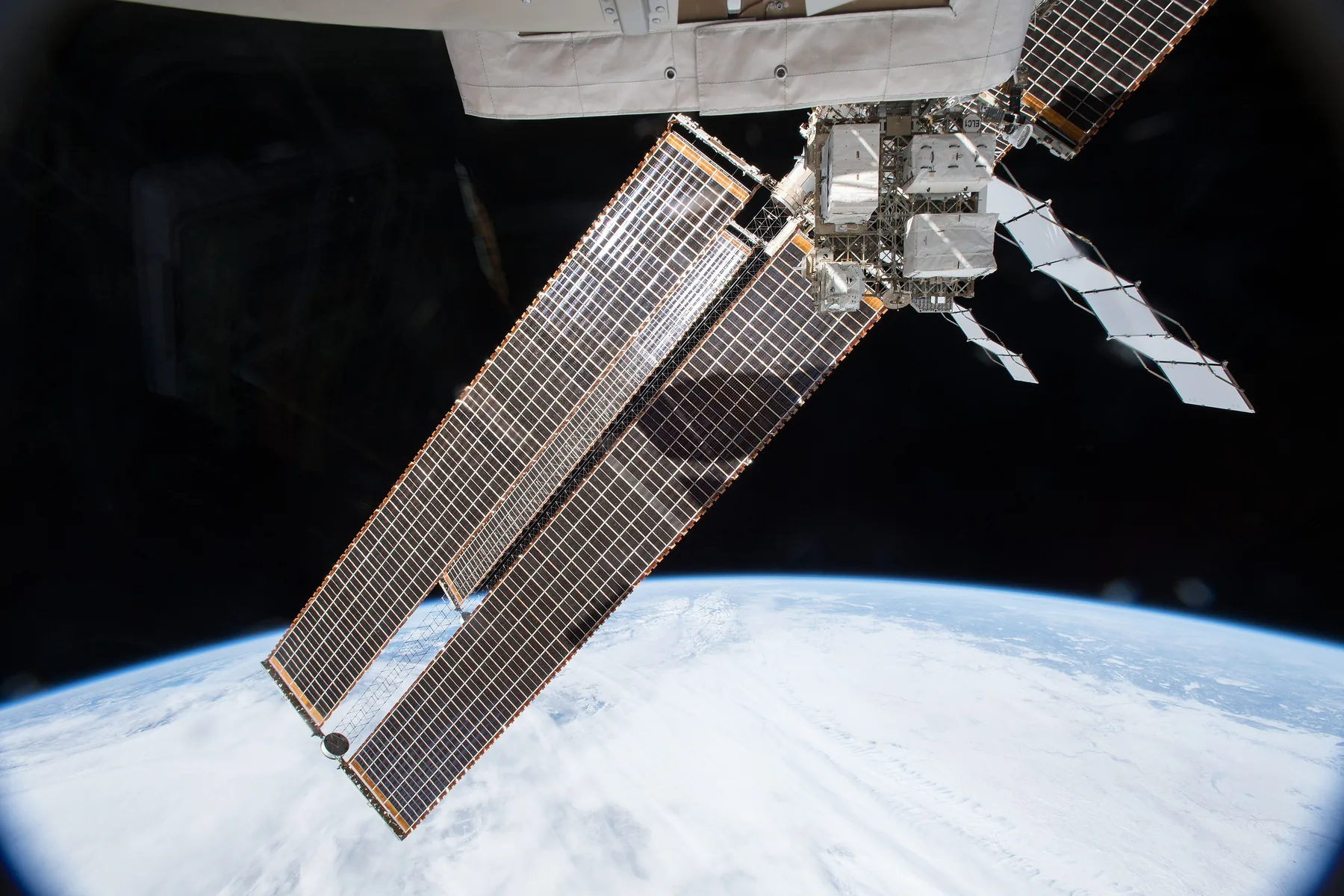
Elon has described Starmind in computer terms. On the second-quarter webcast on August 4, he called it "essentially an optimized Vera Rubin NVL72 computer," a rack-scale system from NVIDIA. The same day SpaceX announced that it is working with NVIDIA on the Starmind AI1 compute payload, with NVIDIA Rubin graphics processing units (GPUs) and Vera central processing units (CPUs) in every satellite. On October 1 Elon added that each spacecraft "will have over 250kW of solar power, which is about 20% more than the International Space Station."
Power is the reason to go to orbit. SpaceX's prospectus, filed with the Securities and Exchange Commission (SEC) on June 12, 2026, sets a goal "to launch 100 gigawatts of compute to space each year." The satellites are planned for a dawn-dusk Sun-synchronous orbit, a path that keeps them over the line between day and night, which the filing says "delivers near-constant solar exposure." It adds that solar panels in space collect "more than five times the energy per unit area of terrestrial solar," and that sunlight in orbit avoids the "power procurement, grid interconnections, and permitting" that slow data centers on the ground.
SpaceX is preparing for a fleet far larger than Starlink. Its January 2026 application to the Federal Communications Commission (FCC) covers up to 1 million satellites in orbits from 500 to 2,000 kilometers up, while SpaceX reported more than 11,100 Starlink satellites in orbit at the end of September. Starship, the fully reusable rocket built to carry them, is central to that plan, and Elon told investors on October 20, "We expect Starship to fly weekly at some point in the first half of next year."
SpaceX had 1.7 gigawatts of SI compute capacity installed on the ground at September 30, 2026, including the Colossus 2 supercomputer in Memphis, Tennessee. By Elon's math, that ground fleet would end up as a rounding error next to what flies on Starmind.
Sources (9)
- Elon Musk on X: Post on superintelligence compute in space, November 2, 2026
- SpaceX: Third Quarter 2026 Webcast, edited transcript, October 20, 2026
- SpaceX: Second Quarter 2026 earnings webcast, edited transcript, August 4, 2026
- SpaceX on X: Starmind AI1 compute payload with NVIDIA, August 4, 2026
- Elon Musk on X: Star Mind solar power, October 1, 2026
- SpaceX: Final prospectus (Form 424B4), filed June 12, 2026
- SpaceX: Form 10-Q for the quarter ended September 30, 2026, filed October 22, 2026
- SpaceX: Third Quarter 2026 results, October 20, 2026
- Via Satellite: SpaceX acquires xAI to pursue orbital data center constellation, February 2, 2026
