- MACROHARD is one of four main teams at SpaceXAI (formerly xAI), alongside Grok Main, Coding, and Imagine.
- Despite the name being a joke directly countering "Micro-soft," Elon Musk has called it "probably our most important project," built for full digital emulation of any company whose output is digital.
- The thesis is that 80-95% of the world's software runs on a visual/ graphical interface. An AI agent capable of true end-to-end desktop orchestration can produce the output of any company whose product is bits, not atoms.
What is MACROHARD?
MACROHARD (also referred to as "Digital Optimus") is Elon Musk's SpaceXAI initiative built to completely replace all digital work and digital tools used today. In simple terms, the project is designed to use AI to completely automate and replace anybody whose job does not require physical labor. The longer term goal is to replace entire companies, such as Apple, that don't do any of their own manufacturing.
MACROHARD is one of four main teams at SpaceXAI (formerly xAI), alongside Grok Main, Coding, and Imagine.
On the roof of a giant building in Memphis, Tennessee, one word is painted in letters so large you can read it from space: MACROHARD.
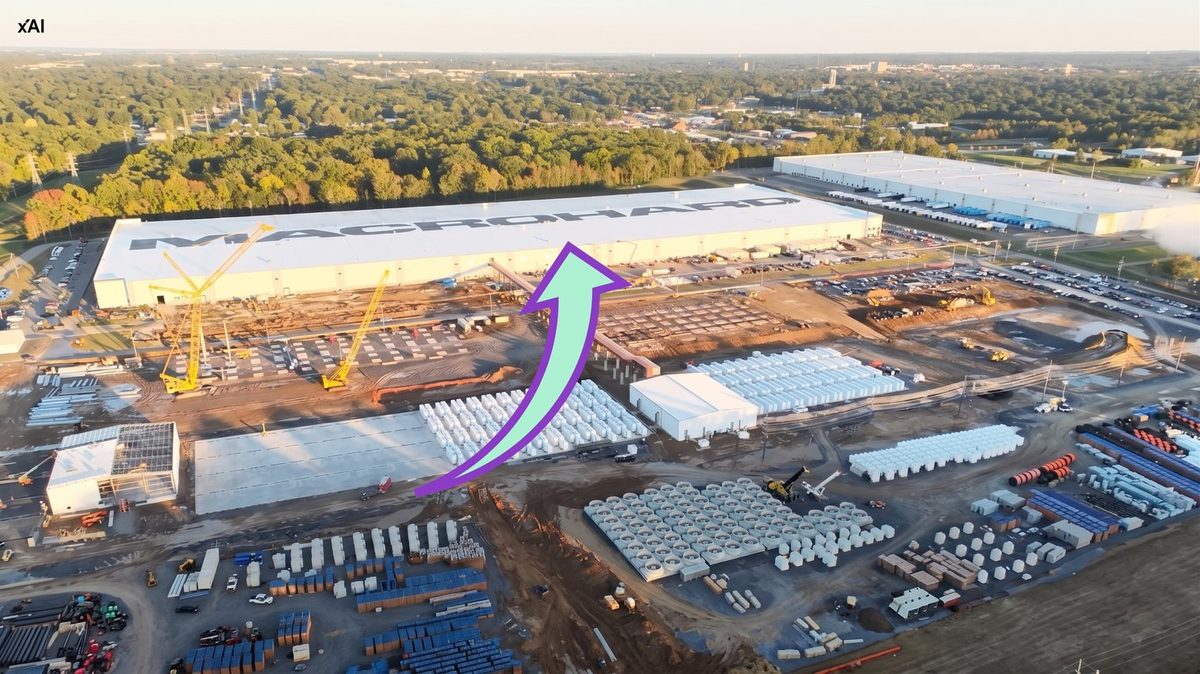
The building underneath is the most powerful AI supercomputer ever built. It's called Colossus 2, and it uses enough electricity to power a small American city. Inside, dozens of teams are training an artificial intelligence whose stated purpose is "the full digital emulation of entire companies." The target is Microsoft. Specifically, Microsoft's $3 trillion software empire, which made about $281.7 billion in fiscal year 2025 selling Microsoft Office, the Azure cloud platform, Windows, and the rest of the products most office workers use every day.
Elon Musk hinted at the idea long before he made any formal announcement. His earliest public mention came in 2021 in a single line on X: "MACROHARD >> Microsoft":
This was notably well before April 14, 2022 when he submitted the initial offer to buy Twitter. At the time, it looked like a throwaway joke, but as is often the case, Elon was hinting at a real product idea.
He made the project official on August 22, 2025, in a hiring post that called MACROHARD "a tongue-in-cheek name" for "a purely AI software company" that could "simulate Microsoft entirely with AI." It was still easy to dismiss as a joke, but those who doubt the project will soon see the reality of the progress.
Six months later, at the xAI All-Hands meeting on February 11, 2026, Elon detailed the project's scope:
(Start video below at 19:34.)
"Most important project"- Inside a company that is also building Grok- the coding AI, Imagine- the image and video AI, and an orbital data center plan, MACROHARD is the one Elon singles out. The scale of this ambition is the North Star for everything in this article.
On March 11, 2026, Elon revealed that MACROHARD is a joint Tesla and xAI project, and that the small computer chip inside every newer Tesla, called 'AI4,' is going to help do the work. The next day he added this:
But this story still has decades of twists and turns remaining. On May 6, 2026, Elon dissolved xAI as a separate company. MACROHARD is now part of Tesla and SpaceXAI, the AI products arm of SpaceX, just ahead of the company's initial public offering (IPO) in mid-June 2026.
This article walks through what MACROHARD actually is, why Elon is targetting Microsoft first, how the system is built to work, when it ships, and why it may be the single largest revenue driver inside SpaceX.
The Form S-1 SpaceX submitted to the SEC names a total addressable market of roughly $23 trillion in enterprise software alone, the segment MACROHARD is targeting first. At current levels, the entire global economy is about $115 trillion.
A MACROHARD agent is supposed to do the labor an office worker does end-to-end: open the email, read it, decide what to do about it, open the spreadsheet, update the cells, build the chart, save the file, send the next email... It does this on a real computer using the same keyboard-and-mouse interface that humans use today. No special integration is needed on the customer side.
Right now, you open Outlook to write an email, Excel to build a budget, Salesforce to update a customer record. The software does not do the actual work. You do the work, using the software.
Instead of using apps and paying for this expensive enterprise software, customers will see every pixel rendered on the computer screen, generated in real-time. The relatively low cost, combined with delivering on the custom needs of the user will make it impossible for human programmers to compete.
Most software was hand coded by humans. Humans collaborated to plan the features, to plan the user interface (UI), to write the actual code. On the other end, the users of the software are also humans. The goal of MACROHARD is to take humans out of the loop entirely.
In order for this to be possible at all, you need four things: a world-class team, enormous computing power, an agent platform that can actually code, and a way to make more chips than the entire world can currently make. Thanks to collaborations among Tesla, Intel, Cursor, and the rest of SpaceXAI, MACROHARD has access to all four at the same time:
The Team
The MACROHARD team is comprised of a hybrid of talent. The project lead is Ashok Elluswamy (pictured below), who is also Tesla's Vice President of AI Software and who built much of Tesla's Autopilot system.
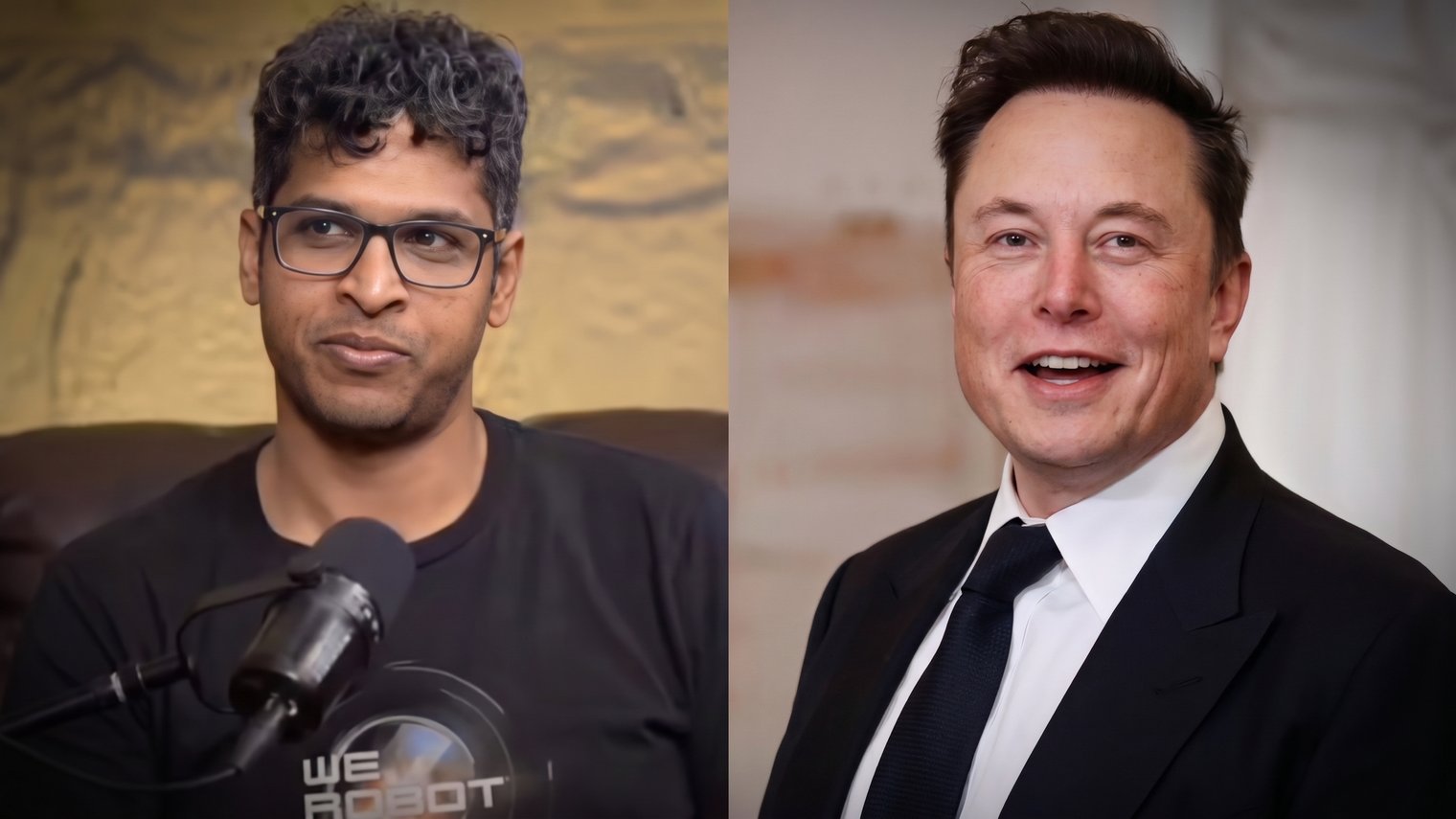
This is the joint Tesla-SpaceXAI structure in practice. Tesla supplies the chip and the fleet. SpaceXAI supplies the model. The sandbox execution team is split between Palo Alto and London. (More about this in the 'How MACROHARD Works' section).
The Memphis Compute (Colossus 2)
Colossus 2 is the building in Memphis with MACROHARD painted on the roof. It came online on January 17, 2026. Elon described it as the first AI training cluster of its size anywhere in the world.
Musk said Colossus 2's first batch of 550,000 GB200s and GB300s was coming online (July 23, 2025), not that 550,000 Blackwell chips were installed and drawing 2 GW by early 2026.
The company prospectus says Colossus and Colossus 2 collectively provide about 1.0 gigawatt of compute power. Musk (January 17, 2026) said Colossus 2 was operational at one gigawatt, with a 1.5 GW upgrade stated for April. For comparison, a typical American suburb of 100,000 people uses roughly 50 megawatts. Colossus 2 uses tens of times that. To put that in perspective, 1.5 GW is the equivalent of roughly 15 million hyperactive hamsters spinning in tiny wheels 24/7!
The cluster is split across 12 data halls, each connected by 847 miles of fiber-optic cable.
As of April, 2026, Colossus 2 is training seven different AI models at the same time, including an image and video model called Imagine V2, two AI models in the 1 trillion parameter range, two more at 1.5 trillion, one at 6 trillion, and the largest one at 10 trillion parameters. A parameter is a single number inside the AI that gets adjusted during training. More parameters generally means more capability.
MACROHARD trains on this stack. So does the next generation of Grok. So does the next generation of every other model SpaceXAI is building.
The Cursor Partnership
Cursor is the AI coding tool of choice for most professional software developers. On April 21, 2026, SpaceX and Cursor announced a partnership. The deal terms are unusual: SpaceX has the option to acquire Cursor outright for $60 billion later in 2026, or pay $10 billion for the partnership work alone, without acquiring the company.
Why does this matter? Agent coding is the single most important capability MACROHARD needs. The agent does not just need to type code, it needs to read existing code, understand what is going on, and decide what to write next. Cursor's product is the current state-of-the-art at exactly that, and Cursor's training data is the largest known set of real-world examples of programmers writing code at scale.
Cursor's coding stack is now being merged into MACROHARD's training. Elon posted on May 17, 2026 that the Cursor data was being added to supplemental training and that the release window was three or four weeks away. That put the next MACROHARD update in the mid June 2026 window, the same window as the SpaceX IPO.
The TERAFAB Chip Supply
The whole AI industry is bottlenecked by how fast NVIDIA, TSMC, AMD, Micron, and a handful of other companies can manufacture the chips that AI training needs. Industry chip output has historically grown about 20 percent per year. That is not fast enough to keep up with the doubling pace of AI training requirements.
On March 21, 2026, Tesla and SpaceX jointly announced TERAFAB. The name says the goal: a fab (chip factory) capable of producing one terawatt, or one trillion watts, of computer power per year. Roughly 80 percent of that output is earmarked for orbital data centers in space, 20 percent for use on the ground.
Two weeks later, on April 7, 2026, Intel joined the partnership:
TERAFAB is the chip supply solution. The constraint on MACROHARD is not algorithms or models. The constraint is electricity and chips. TERAFAB is the bet that vertical integration into chip manufacturing solves both: enough chips to grow Colossus 2 to a target of 50 gigawatts of training compute by 2027, and enough excess for orbital data centers to use solar power directly from space rather than fight power grids on Earth.
Why the "Digital Optimus" Name?
In March 2026, Elon added a second name to the project: "Digital Optimus." Optimus is the Tesla humanoid robot designed to do physical labor. Digital Optimus is the software version.
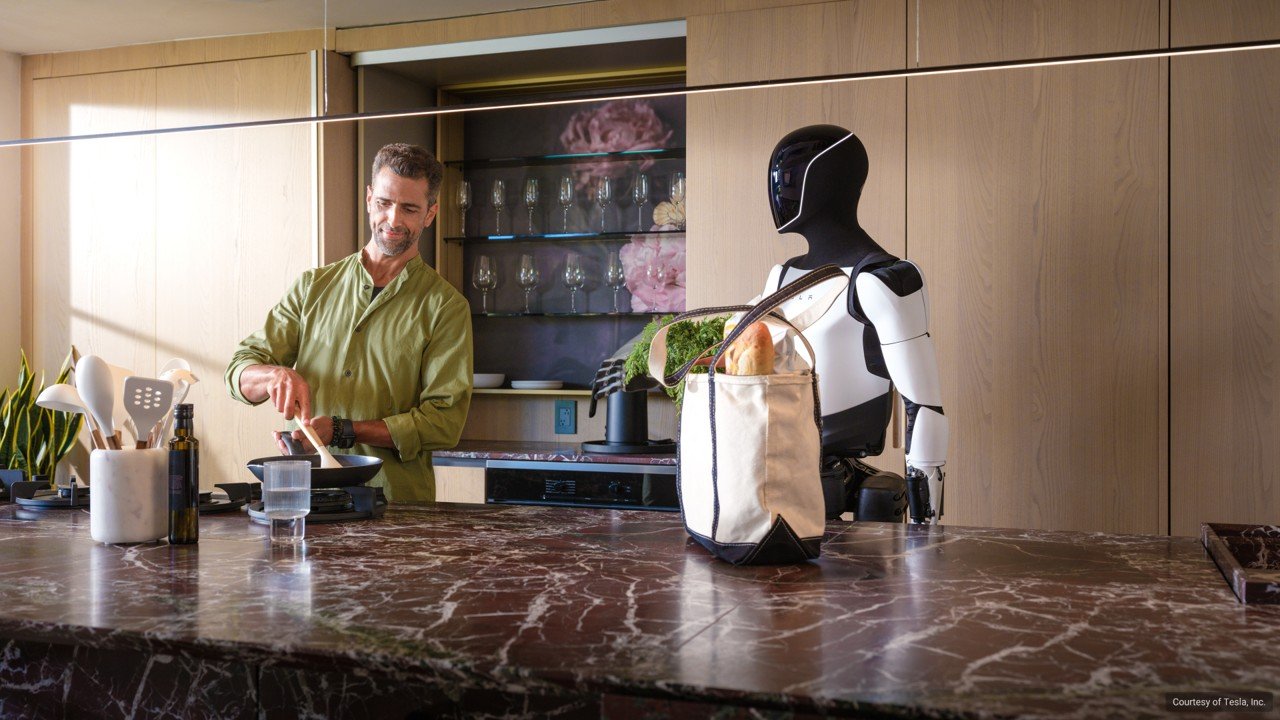
The name reflects the agent-orchestration idea: use Grok to tell Digital Optimus what to do. To make sense of how the two work together, Elon uses a brain analogy:
System 2: Grok- the slow, deliberate part of the mind. It holds a deep model of the world and decides what should happen next. Elon also likens Grok to a far more advanced version of turn-by-turn navigation: it reads the whole map and calls each move, while Digital Optimus is the driver carrying those moves out on the live screen.
System 1: Digital Optimus- the fast, instinctive part of the mind. It watches the computer screen like a live video and takes the last five seconds of the screen recording along with the continuous stream of keyboard and mouse actions. It responds on pure reflex the way the limbic system drives automatic behaviors without conscious thought.
This split is what makes the economics work. The cheap, instinctive layer runs constantly on low-cost hardware like Tesla's AI4 chip, while the expensive, deliberate layer is reserved for the moments that actually need judgment.
Timeline
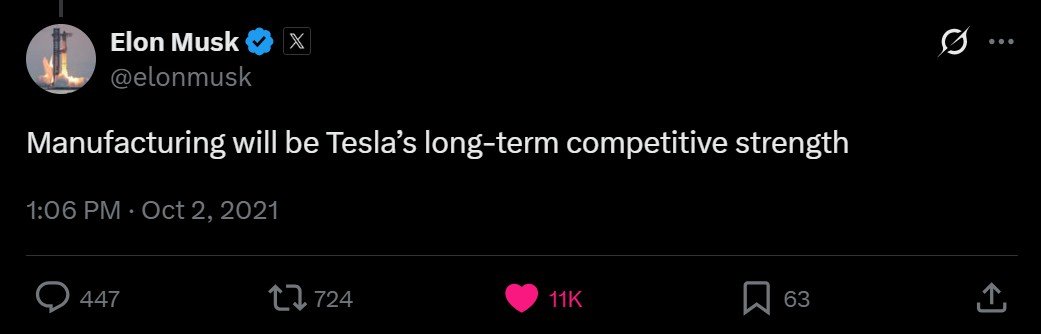
October 24, 2021: Elon Musk posts a tweet: "MACROHARD >> Microsoft" (Note: Elon first offered to buy Twitter on April 14, 2022).
August 22, 2025: Elon Musk posts a hiring call on X for "a purely AI software company called MACROHARD." He calls the name tongue-in-cheek and frames the project as an attempt to simulate Microsoft entirely with AI.
September 15, 2025: Elon posts that MACROHARD is being painted on the roof of the Colossus 2 supercomputer in Memphis. He says the lettering will be big enough to read from space.
October 3, 2025: xAI Careers posts a job listing for the MACROHARD sandbox execution team. The job requires Rust, Linux, and computer networking skills. The team is based in Palo Alto or London.
October 6, 2025: Elon comments on MACROHARD's direction and scope as the project hires aggressively in its first weeks.
October 12, 2025: Elon gives a hint at the actual scale MACROHARD is targeting: "Our goal is to create a company that can do anything short of manufacturing physical objects directly, but will be able to do so indirectly, much like Apple has other companies manufacture their phones."
December 7, 2025: Elon previews how MACROHARD will scale across the broader AI stack ahead of the February All-Hands.
January 17, 2026: Colossus 2 goes operational. Elon describes it as the first AI training cluster of its size anywhere in the world.
February 11, 2026: At the xAI All-Hands meeting, Elon reorganizes xAI into four main projects. MACROHARD is one of them. The other three are Grok (the main AI), Coding (programming-specific AI), and Imagine (image and video generation AI).
March 11, 2026: Elon posts the biggest update yet. MACROHARD is "a joint xAI-Tesla project, coming as part of Tesla's investment agreement with xAI." The system will run on a $650 computer chip already installed inside every newer Tesla, called the AI4. He gives the project a second name: Digital Optimus.
March 12, 2026: One day later, Elon adds the sentence that defines the project: "Oh and it works in all AI4-equipped cars, so your car can do office work for you when not driving."
March 21, 2026: Tesla and SpaceX jointly announce TERAFAB, a new chip factory designed to make one trillion watts of computer power per year. About 80% of the output is reserved for use in space.
April 7, 2026: Intel joins TERAFAB as a partner.
April 8, 2026: Elon posts that Colossus 2 is currently training seven AI models at the same time. The largest model has 10 trillion parameters, which is the most ambitious AI training run ever attempted.
April 21, 2026: SpaceX and Cursor, the most-used AI coding tool company among professional programmers, announce a partnership. SpaceX gets the option to acquire Cursor for $60 billion later in the year, or pay $10 billion for the partnership work alone.
May 6, 2026: Elon dissolves xAI as a separate company. MACROHARD, Grok, Coding, and Imagine all move under SpaceX, rebranded as SpaceXAI, the AI products arm of the company.
Why Elon Wants to Build It
Microsoft is a $3 trillion company because it sells the tools knowledge workers use. In fiscal year 2025, Microsoft made about $281.7 billion in revenue. That revenue came from three main segments: Productivity and Business Processes at about $120.8 billion (Office, LinkedIn, Dynamics), Intelligent Cloud at about $106.3 billion (Azure, server products), and More Personal Computing at about $54.6 billion (Windows, devices, gaming, search). The simplified Office, Azure, and Windows pillars shown earlier are the primary revenue drivers within these three broader segments.
If AI can operate the software directly, the entire revenue stack becomes contestable. Elon's August 22, 2025 announcement presented the logic in a straightforward way: "given that software companies like Microsoft do not themselves manufacture any physical hardware, it should be possible to simulate them entirely with AI."
Stepping back to see the bigger picture, the history of the technology industry is a series of moments where one platform overtook another. IBM mainframes ruled enterprise computing from the 1960s into the 1970s. Microsoft and the PC overtook IBM in the early 1980s. Google and the web overtook Microsoft's reach into how information was found, starting in the late 1990s. Apple and mobile redefined personal computing again starting in 2007. AWS and cloud redefined enterprise computing again starting in 2010.
Each of these shifts made the previous category's leading product less relevant. And each winner captured 60 to 80 percent of the new category's profits within a decade.
MACROHARD is the bet that the AI agent era is the next such cycle. The 2010s were the cloud era. The 2020s are turning into the AI assistant era. The 2030s, is expected to become the AI agent era. The company that captures the AI agent layer should take around 60 to 80 percent of the new category.
MACROHARD is initially focused on building custom enterprise software with AI, but soon enough, we should expect complete replacement of entire companies. Microsoft, ServiceNow, Oracle, Salesforce, and others, who have built their business on moving things around on a screen are in the process of being majorly disrupted.
But there is one more reason Elon is pioneering this project. The multiplanetary mission needs an economic engine of historic scale. Launch services revenue is real but not enormous. Starlink is enormous but growing into its market and still not sufficient to singlehandedly fund the long-term aspirations of SpaceX. MACROHARD is focused on the largest software category on Earth, and eventually reinventing a new category that replaces the old one completely. If it works, it funds the next 25 years of SpaceX.
Plus, there is only one person in the world who can inspire a team to work this rapidly:
How MACROHARD Works
For MACROHARD to actually do "full digital emulation," it has to solve three things: 1. Operate the software, 2. Do the work, and 3. Learn from its own runs.
Operating the software: this is what the October 2025 job posting was about. The team xAI hired needed to know Rust, Linux, and computer networking. Rust is a programming language used to build secure, fast applications. Linux is the operating system that most servers run on. Computer networking is the plumbing of the internet.
What this team is building is called a sandbox. A sandbox is a piece of software that sits between the AI model and the real operating system. When the AI decides to click a button, the sandbox watches the click, decides whether to allow it, and then performs the click on a real computer. Same for typing, moving files, opening browsers, and calling other software.
A sandbox is what makes "full digital emulation" possible without the customer having to do anything. The MACROHARD agent does not need special access to Office or Salesforce or any other enterprise software. It uses those tools the same way a human does: by clicking, typing, and scrolling.
Doing the work: most of the day-to-day output of a knowledge worker is code, documents, spreadsheets, emails, and reports. MACROHARD's coding ability comes from the same place as the rest of the AI at SpaceXAI: a set of neural networks trained on enormous amounts of text and code.
In April 2026, SpaceXAI partnered with Cursor, the most-used AI coding tool among professional programmers. Cursor's coding agents and its existing training data became part of MACROHARD. Elon posted in May 2026 that the Cursor data was being added to supplemental training, with a release window of three or four weeks. That landed the next big update right around the time of the SpaceX IPO in June 2026.
Learning from its own runs: This is the "recursive self-improvement" often discussed by folks who work with AI. The next generation of MACROHARD code is increasingly being written by the previous generation of MACROHARD. The system improves with each round.
This loop is what Elon was referring to in his All-Hands closing when he said:
But the journey to prosperity will not be a straight line- the harder parts of the problem are important to acknowledge as well. The agent has to remember what it is doing across long-running tasks. It has to handle errors without crashing. It cannot hallucinate facts that get acted on as real. It has to comply with the rules a real company has to follow, like privacy laws and audit requirements. None of these are fully solved problems today. The article comes back to them in The Skeptics section.
How the Tesla Fleet Becomes a Data Center
In March 2026, When Elon posted that MACROHARD is "a joint xAI-Tesla project," he added some detail on how the inference layer would work.
The split between training and running the agent is the key. The model gets trained on Colossus 2's NVIDIA chips. But the day-to-day work of running the agent, which is called inference, happens on a much smaller and cheaper chip: the Tesla AI4 chip. Elon described it in this way:
One day later, Elon added:
To understand why this matters, think about where every other AI agent company runs their software today. Anthropic runs Claude inside its own data centers. OpenAI runs ChatGPT inside Microsoft's Azure data centers. Google runs Gemini on Google's TPU pods. Salesforce runs Agentforce on its own cloud. Each is constrained by how many data centers they can afford to build and how much electricity those data centers can draw from the grid.
MACROHARD has a totally different option. There are millions of newer Tesla vehicles already on the road, each with an AI4 chip onboard, each plugged into power most of the time, each parked and unused the majority of every 24-hour day. That is a distributed computing network already deployed, already paid for, and already powered. The AI4 chip costs Tesla $650 to make. Tesla already paid that cost when the vehicle was sold.
If MACROHARD agents can do inference on that fleet, the cost structure of AI agents changes fundamentally. Every other company has to pay to build new data centers. MACROHARD inherits a distributed data center that is already built, sitting in driveways across the country.
The Other Players: Who Else Is Trying
MACROHARD is not the only company trying to build agentic software using AI. The field is crowded. Here is the state of the major competitors as of mid-2026, ranked by what they can do today.
Salesforce: Agentforce. Salesforce launched its Agentforce platform in late 2024 and expanded it through 2026. It does the best customer relationship management (CRM) work in the industry: pulling customer records, running campaigns, generating reports. It is locked to Salesforce's own ecosystem.
Microsoft: Copilot. Microsoft's Copilot ships inside Office, Windows, and GitHub. It is designed to assist humans at the keyboard, not to replace them.
OpenAI: Operator and Agents. OpenAI launched Operator in January 2025 and folded it into a broader Agent product in July 2025. Operator works inside a browser. It can fill out forms, make orders, and do basic multi-step tasks. It does not yet handle complex desktop apps or cross-app workflows. It needs human takeover on sensitive actions.
Google: Gemini Spark and Project Mariner. Google announced Gemini Spark at I/O 2026. The pitch is a 24/7 personal AI agent that can do recurring tasks and learn new skills. Like Operator, it lives mostly in the browser and inside Google's own apps.
Anthropic: Claude computer use. Anthropic, the company behind the Claude AI, launched a tool called "computer use" in late 2024 and rolled it out in production through 2025. It lets Claude take screenshots of a computer screen, move the mouse, type on the keyboard, and scroll. It is the closest thing today to MACROHARD's vision. Anthropic describes the tool as experimental and prone to mistakes on complex screens.
Additionally, open-source projects are useful for developers building their own agents, but not yet production-grade for general office work. This shows a general visual representation of how the AI agents compare.
Every one of these includes one or more pieces of what MACROHARD is trying to build, but none of them has the whole picture. None of them does long-horizon, cross-application, autonomous emulation of an entire company's software output.
On May 6, 2026, the same day xAI was dissolved into SpaceX, the company also announced a deal with Anthropic. Anthropic now buys access to Colossus 1 for its Claude Pro and Claude Max products. Anthropic also expressed interest in partnering on multi-gigawatt orbital AI compute capacity.
This is yet another example of the atypical competitive dynamic in AI right now: a direct competitor in the agent layer (Anthropic Claude) is paying SpaceXAI for the compute layer underneath. The deal does not make Anthropic any less of a competitor, but it does mean the SpaceXAI compute stack is now generating revenue from one of the strongest agent-research labs in the industry.
Since this deal was announced, SpaceXAI signed yet another deal with Google on June 5, 2026. Google pays $920 million per month to rent AI computing power and gets access to ~110,000 NVIDIA GPUs, plus CPUs, memory, and related hardware.
The next question is when MACROHARD actually ships- This is the expected roadmap:
Near-term (June 2026). Elon's May 17, 2026 post said the next big Grok release was three or four weeks away. The release will incorporate the Cursor data into MACROHARD's supplemental training. That puts the release in the mid-June 2026 window. The same window as the SpaceX IPO. This is not an accident. SpaceX is launching its biggest AI product the same week public investors will be able to buy shares for the first time.
Mid-term (2026 to 2027). Colossus 2 continues scaling toward multi-gigawatt class power. TERAFAB construction continues in Texas, near Texas A&M. The first AI4 fleet inference roll-out begins. The first MACROHARD enterprise pilots ship to paying customers.
Long-term (2027 and beyond). This is where MACROHARD connects to the multiplanetary thesis.
Software services cost has fallen exponentially for the last 20 years. The cost of one AI token, which is roughly the cost of doing one small piece of mental work, has dropped about 280 times since late 2022. Doing the same task in late 2025 cost about a third of one percent of what it cost three years before.
If trends continue, AI inference cost should fall another 90 percent over the next four years. The fall is the same shape that SpaceX produced in launch services: launching a kilogram to orbit cost $15,600 in 2008, under $1,000 with the Falcon 9, and is on track for under $100 with Starship. Same compounding cost curve, applied to a different industry.
This is by no means a coincidence. The first time, the cost of moving mass to orbit fell far enough that orbital infrastructure became viable. The second time, the cost of doing knowledge work falls far enough that full company emulation becomes viable. Both compounding curves are the foundation for the future of sustainable abundance.
At the All-Hands meeting in February 2026, Elon closed by describing the long-term goals: orbital data centers (built using Starship cargo capacity), then moon-based mass drivers (giant rail guns that fire chunks of metal into space at a tiny fraction of the cost of launch), and eventually building infrastructure to capture more of the Sun's total energy output. This is what scientists call the Kardashev scale: a Type 1 civilization uses all the energy of its planet. A Type 2 uses all the energy of its star (the Sun). Type 3 uses all the energy of the galaxy. Elon's framing puts SpaceX on a path from Type 0 to Type 2 within a few generations.
MACROHARD is the fuel that funds every step needed to climb the Kardashev scale.
How to Position Yourself
The first wave of people to feel MACROHARD's effects are knowledge workers. Look at the jobs that are most exposed by the kind of agent system MACROHARD is building, expressed as the share of U.S. employment and the share of tasks within each job that an agent system can already do today:
The data is from Goldman Sachs and McKinsey's 2025 automation-exposure studies. Each category's "automatable share" represents what current agent systems can do, not what MACROHARD's stated target can do. MACROHARD's target is to push every one of those automation percentages much higher, across the full task list.
The practical stance right now is to use AI agents to supplement your skills today. The knowledge workers who do best in the next five years will be the ones who learned to manage and edit AI output before everyone else.
The path for retail investors to own a stake in MACROHARD is the SpaceX IPO. SpaceX is reportedly allocating up to 30 percent of shares to retail investors, an unusually large share. ETrade is leading the retail distribution. Robinhood, Fidelity, SoFi, Charles Schwab, and Public.com are participating.
The Skeptics
The case for MACROHARD is real, but the case against it has been building- nothing like this, at this scale has ever been attempted, much less completed successfully. The article would not be doing its job if it ignored the strongest arguments from the people who think the project will be unsuccessful. Here are five skeptic positions:
The "demos will not generalize" critique- Full digital emulation is overpromised/ exaggerated, and the demos will not generalize to real enterprise workflows. The history of enterprise software is littered with products that worked in demos and failed in production. Building an agent that can handle a finance team's actual monthly close, or a legal team's actual contract review, is harder than the demos suggest.
The Microsoft distribution moat- Microsoft has a 30-year head start on enterprise distribution. Most large companies have hundreds of compliance certifications, multi-year contracts, and IT teams that are already familiar/ comfortable with the Microsoft stack. Replacing all of that takes effort, so even if MACROHARD ships and works, customer switching is the slowest part of any technology transition.
The competitive-pace argument- OpenAI, Anthropic, and Google ship faster than SpaceXAI, have larger labeled data sets to train on, and have more mature safety rails. They say MACROHARD's goals are downstream of artificial general intelligence, so if artificial general intelligence does not arrive on schedule, MACROHARD does not arrive either.
The labor-and-politics argument- Labor-market disruption framing is bad politics. The path-of-least-resistance political response to AI eliminating knowledge work is regulation. The history of new technologies meeting unions and political opposition is not flattering to the technology in the short term.
The Elon execution premium- MACROHARD's valuation includes a meaningful share of an "Elon premium," which is the market's assumption that anything Elon attempts will eventually work. Though the premium has been justified by SpaceX's history, some divert attention and say Tesla timelines have been missed in the short term.
Implications
The big picture can be challenging to wrap your mind around because MACROHARD completely breaks the paradigm of what nearly all of us believed was possible just 5 years ago.
Knowledge work has been the highest-value category of human labor for two generations. A doctor, a lawyer, a programmer, a financial analyst, a marketer, a designer: each of these jobs has historically been valued because each requires exercising the mind.
If MACROHARD is successful to the degree they expect, the cost of producing the charts, reports, files, etc. nearly falls to the cost of the compute that runs the agents. And not only does the cost decrease dramatically, but the quality will also improve dramatically. MACROHARD will have the equivalent of super-duper-world-class agents in every field. Thus, the economic value of the digital labor gets disrupted- It goes to three places: the companies that own the compute layer (SpaceX, the cloud providers), the people who own and operate the agents (the new role), and the humans doing work that agents cannot do yet, which is mainly physical work, judgment-heavy work, and work that requires deep human relationships.
Things that used to take ten knowledge workers (or ten thousand knowledge workers) a year to build become possible for one person to do in a week.
The longer-term story remains the multiplanetary one. MACROHARD and the other SpaceXAI products will usher in an age of prosperity, which will generate enough capital to build orbital data centers. Orbital data centers will generate enough capital to build moon-based mass drivers. After that, capturing the Sun's energy and advancing towards a Kardashev 2 civilization will become possible.
The infrastructure is real. Colossus 2 is running. The AI4 fleet of millions of Tesla vehicles is on the road. TERAFAB is being built. Cursor's coding stack is now part of MACROHARD's training.
MACROHARD- What could become the world's most profitable project of all-time, began as a simple joke. But with the SpaceX IPO helping fund investment in all these new initiatives, Elon and the team are accelerating as fast as humanly possible. We're advancing towards a future of sustainable abundance and prosperity, thanks to physical Optimus and Digital Optimus. We have a choice. Let's make the future great!
Thank you to Maggie for sponsoring this article.
Check out my other article about the SpaceX IPO: [Owning a Piece of History](/premium/spacex/ipo/).
If you enjoyed this article, please follow @Elon_Explained on X.
The author may own stock in SpaceX and/ or Tesla. This article is not investment advice.
Sources
- SpaceX. Form S-1 Registration Statement. SEC EDGAR, filed April 1, 2026
- ARK Invest. ARK Disrupt Newsletter Issue 502. March 16, 2026
- Microsoft Corporation. FY2025 Form 10-K. SEC EDGAR, filed July 2025
- xAI Official. xAI All-Hands Video. February 11, 2026
- SpaceX. Cursor Partnership Announcement. April 21, 2026
- Cursor. Partnership with SpaceX. April 21, 2026
- SpaceX. TERAFAB Joint Announcement (with Tesla and Intel). March-April 2026
- Goldman Sachs Research. AI-Automation Exposure Models. August 2025
- McKinsey Global Institute. Generative AI Productivity Analyses. 2025 updates
- Epoch AI. Training Compute and Cost Estimates. Ongoing 2025-2026
- Anthropic. Computer Use Documentation. 2024-2026
- OpenAI. Introducing Operator. January 23, 2025
- Google, Salesforce, Microsoft. AI Agent Capability Documentation. 2025-2026
- U.S. Energy Information Administration. Electricity Generation Benchmarks. 2025
- Elon Musk X posts (URLs cited inline throughout article)
- xAI All-Hands transcript (February 11, 2026) and Grok 4 Livestream transcript
An educational feature, not investment advice. Figures trace to primary filings, official company statements, and Grokipedia; privately held valuations and forward scenarios are labeled as reported or estimated.
Check out my other article about the SpaceX IPO: elonexplained.com/premium/spacex/ipo/
If you enjoyed this article, please follow @Elon_Explained on X.
The author may own stock in SpaceX and/or Elon's other companies. This article is for educational and entertainment purposes only, and not investment advice.